One of the Smallest Dinosaurs
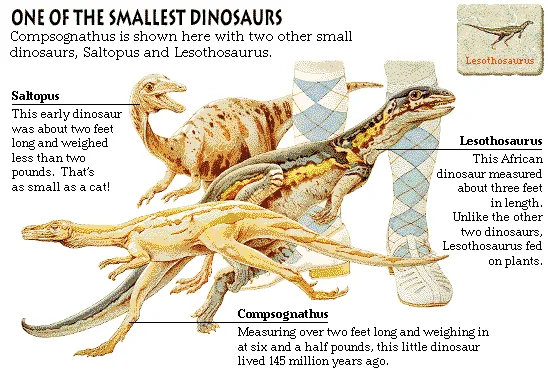
Compsognathus is shown here with two other small dinosaurs, Saltopus and Lesothosaurus.
Don't let its tiny size fool you — this pint-sized predator was one speedy, sharp-toothed little terror!
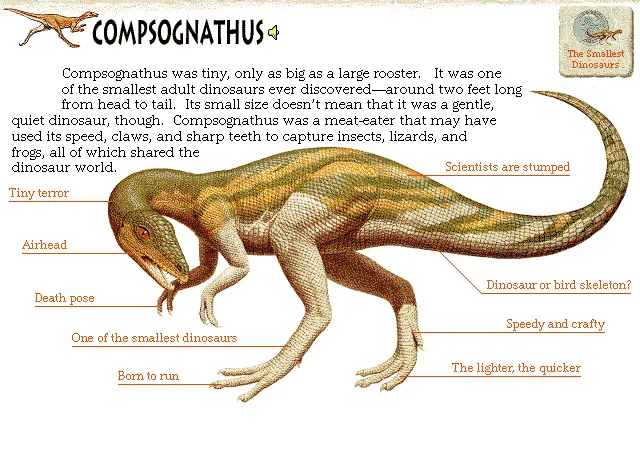
Compsognathus was tiny, only as big as a large rooster. It was one of the smallest adult dinosaurs ever discovered—around two feet long from head to tail. Its small size doesn't mean that it was a gentle, quiet dinosaur, though. Compsognathus was a meat-eater that may have used its speed, claws, and sharp teeth to capture insects, lizards, and frogs, all of which shared the dinosaur world.

Compsognathus is shown here with two other small dinosaurs, Saltopus and Lesothosaurus.

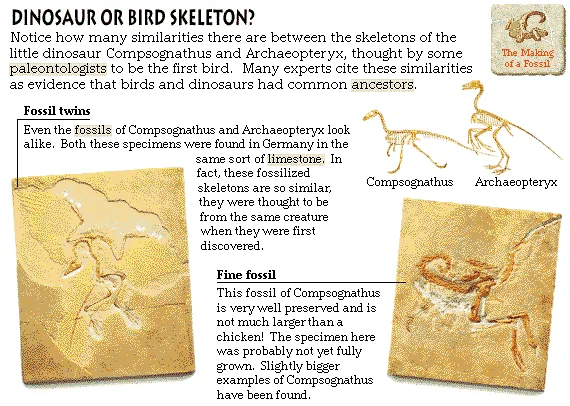
Notice how many similarities there are between the skeletons of the little dinosaur Compsognathus and Archaeopteryx, thought by some paleontologists to be the first bird. Many experts cite these similarities as evidence that birds and dinosaurs had common ancestors.

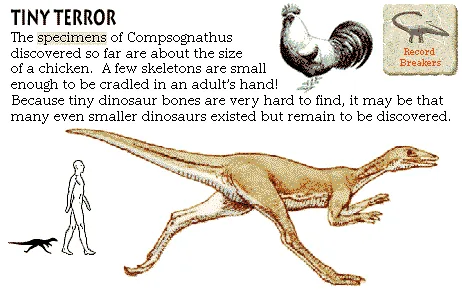
The specimens of Compsognathus discovered so far are about the size of a chicken. A few skeletons are small enough to be cradled in an adult's hand! Because tiny dinosaur bones are very hard to find, it may be that many even smaller dinosaurs existed but remain to be discovered.

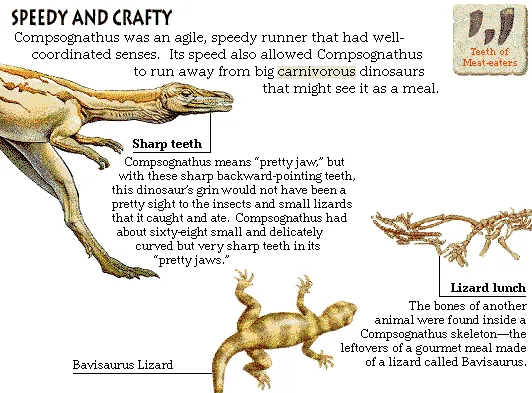
Compsognathus was an agile, speedy runner that had well-coordinated senses. Its speed also allowed Compsognathus to run away from big carnivorous dinosaurs that might see it as a meal.

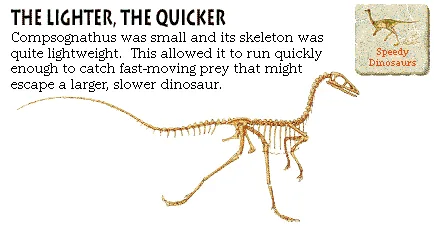
Compsognathus was small and its skeleton was quite lightweight. This allowed it to run quickly enough to catch fast-moving prey that might escape a larger, slower dinosaur.

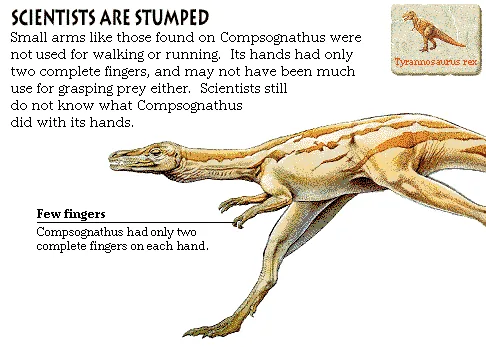
Small arms like those found on Compsognathus were not used for walking or running. Its hands had only two complete fingers, and may not have been much use for grasping prey either. Scientists still do not know what Compsognathus did with its hands.

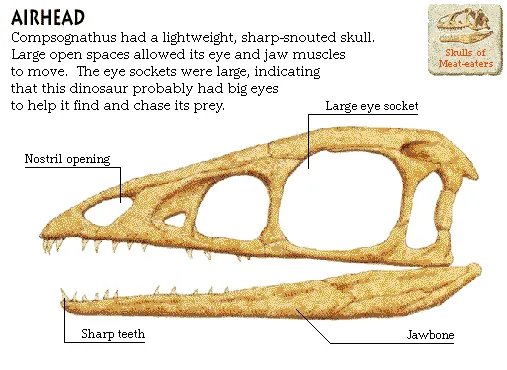
Compsognathus had a lightweight, sharp-snouted skull. Large open spaces allowed its eye and jaw muscles to move. The eye sockets were large, indicating that this dinosaur probably had big eyes to help it find and chase its prey.

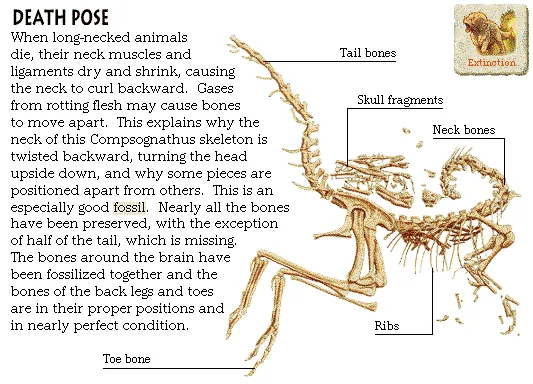
When long-necked animals die, their neck muscles and ligaments dry and shrink, causing the neck to curl backward. Gases from rotting flesh may cause bones to move apart. This explains why the neck of this Compsognathus skeleton is twisted backward, turning the head upside down, and why some pieces are positioned apart from others. This is an especially good fossil. Nearly all the bones have been preserved, with the exception of half of the tail, which is missing. The bones around the brain have been fossilized together and the bones of the back legs and toes are in their proper positions and in nearly perfect condition.

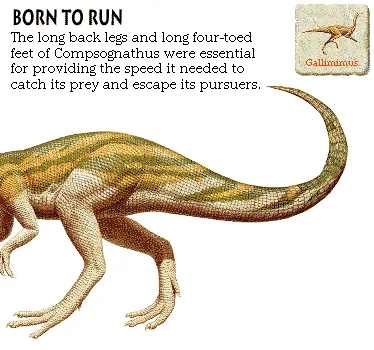
The long back legs and long four-toed feet of Compsognathus were essential for providing the speed it needed to catch its prey and escape its pursuers.
Source: Microsoft Dinosaurs (1993) CD-ROM. Text liberated from original screen art; images & audio restored from disc. Original media is Microsoft/supplier copyright — non-commercial educational preservation. Credits & Acknowledgements