The Beak of a Bird
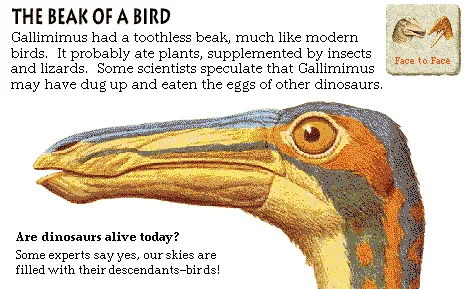
Gallimimus had a toothless beak, much like modern birds. It probably ate plants, supplemented by insects and lizards. Some scientists speculate that Gallimimus may have dug up and eaten the eggs of other dinosaurs.
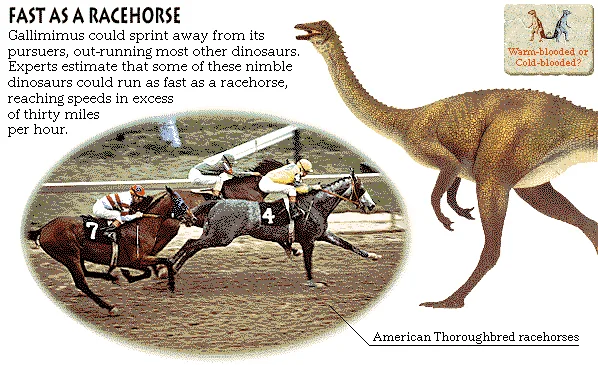
This bird-like speedster could outrun a racehorse!
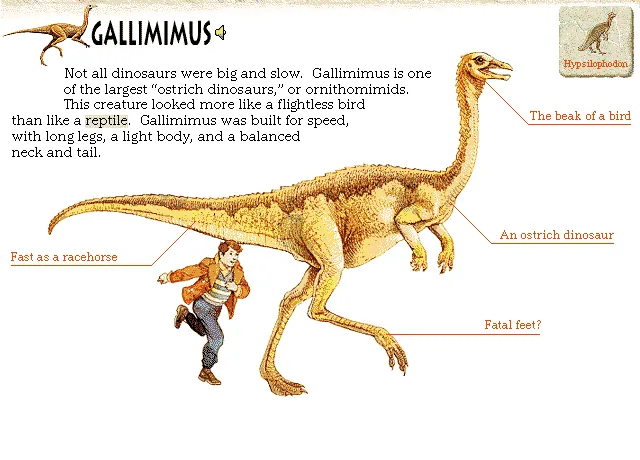
Not all dinosaurs were big and slow. Gallimimus is one of the largest "ostrich dinosaurs," or ornithomimids. This creature looked more like a flightless bird than like a reptile. Gallimimus was built for speed, with long legs, a light body, and a balanced neck and tail.

Gallimimus had a toothless beak, much like modern birds. It probably ate plants, supplemented by insects and lizards. Some scientists speculate that Gallimimus may have dug up and eaten the eggs of other dinosaurs.

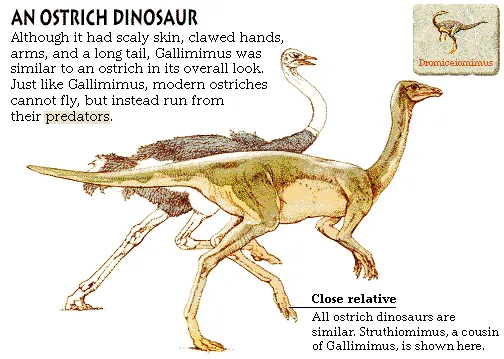
Although it had scaly skin, clawed hands, arms, and a long tail, Gallimimus was similar to an ostrich in its overall look. Just like Gallimimus, modern ostriches cannot fly, but instead run from their predators.

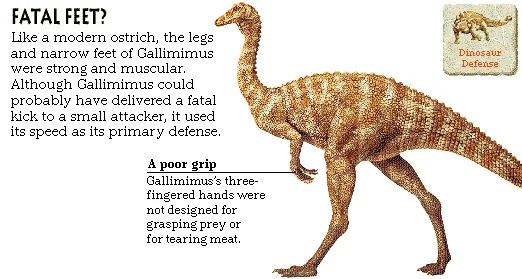
Like a modern ostrich, the legs and narrow feet of Gallimimus were strong and muscular. Although Gallimimus could probably have delivered a fatal kick to a small attacker, it used its speed as its primary defense.

Gallimimus could sprint away from its pursuers, out-running most other dinosaurs. Experts estimate that some of these nimble dinosaurs could run as fast as a racehorse, reaching speeds in excess of thirty miles per hour.
Source: Microsoft Dinosaurs (1993) CD-ROM. Text liberated from original screen art; images & audio restored from disc. Original media is Microsoft/supplier copyright — non-commercial educational preservation. Credits & Acknowledgements