Microsoft Dinosaurs
Tuojiangosaurus
Tuojiangosaurus
Tuojiangosaurus

too-oh-jee-ANG-oh-SOR-us name means “Tuojiang lizard”

The most ornamented plate-backed dinosaur, with two rows of back plates and four deadly tail spikes.

KindDinosaur Period Late Jurassic Diet Herbivore

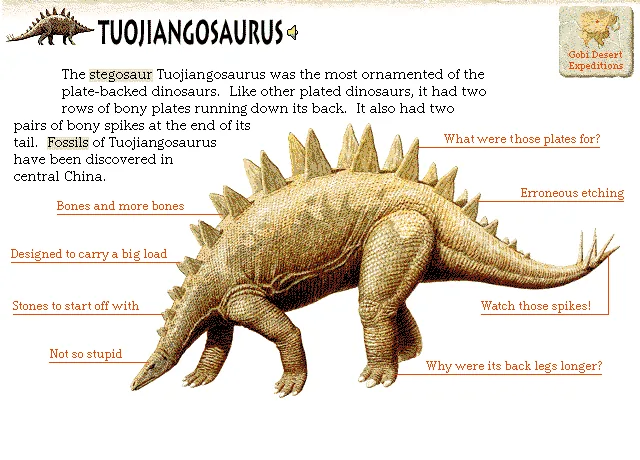
The stegosaur Tuojiangosaurus was the most ornamented of the plate-backed dinosaurs. Like other plated dinosaurs, it had two rows of bony plates running down its back. It also had two pairs of bony spikes at the end of its tail. Fossils of Tuojiangosaurus have been discovered in central China.

Explore

Bones and More Bones

Bones and More Bones

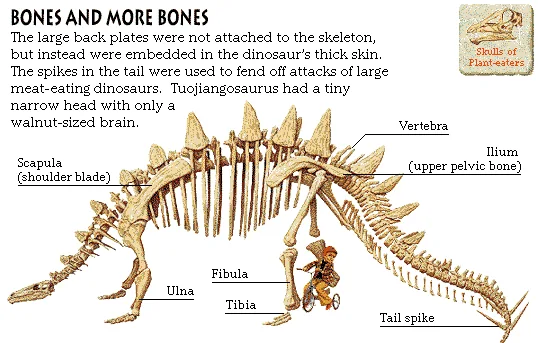
The large back plates were not attached to the skeleton, but instead were embedded in the dinosaur's thick skin. The spikes in the tail were used to fend off attacks of large meat-eating dinosaurs. Tuojiangosaurus had a tiny narrow head with only a walnut-sized brain.
What Were Those Plates For?

What Were Those Plates For?

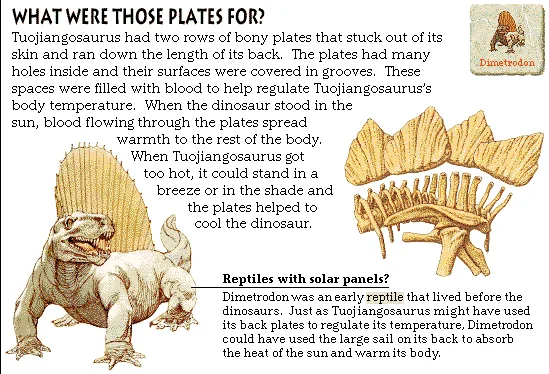
Tuojiangosaurus had two rows of bony plates that stuck out of its skin and ran down the length of its back. The plates had many holes inside and their surfaces were covered in grooves. These spaces were filled with blood to help regulate Tuojiangosaurus's body temperature. When the dinosaur stood in the sun, blood flowing through the plates spread warmth to the rest of the body. When Tuojiangosaurus got too hot, it could stand in a breeze or in the shade and the plates helped to cool the dinosaur.

Reptiles with solar panels?Dimetrodon was an early reptile that lived before the dinosaurs. Just as Tuojiangosaurus might have used its back plates to regulate its temperature, Dimetrodon could have used the large sail on its back to absorb the heat of the sun and warm its body.
Designed to Carry a Big Load

Designed to Carry a Big Load

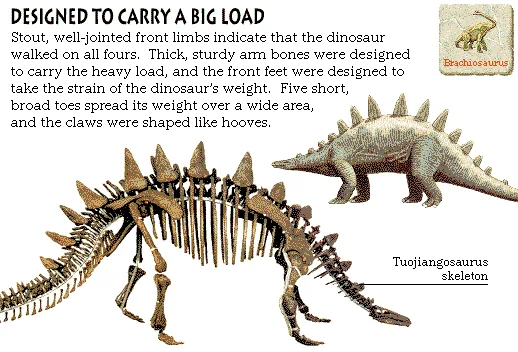
Stout, well-jointed front limbs indicate that the dinosaur walked on all fours. Thick, sturdy arm bones were designed to carry the heavy load, and the front feet were designed to take the strain of the dinosaur's weight. Five short, broad toes spread its weight over a wide area, and the claws were shaped like hooves.

Watch Those Spikes!

Watch Those Spikes!

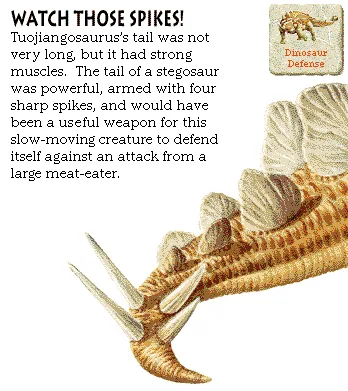
Tuojiangosaurus's tail was not very long, but it had strong muscles. The tail of a stegosaur was powerful, armed with four sharp spikes, and would have been a useful weapon for this slow-moving creature to defend itself against an attack from a large meat-eater.

Why Were Its Back Legs Longer?

Why Were Its Back Legs Longer?

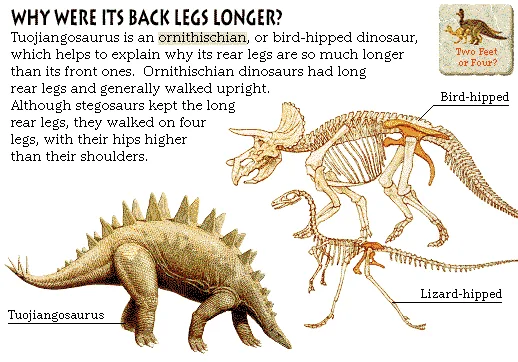
Tuojiangosaurus is an ornithischian, or bird-hipped dinosaur, which helps to explain why its rear legs are so much longer than its front ones. Ornithischian dinosaurs had long rear legs and generally walked upright. Although stegosaurs kept the long rear legs, they walked on four legs, with their hips higher than their shoulders.

Not So Stupid

Not So Stupid

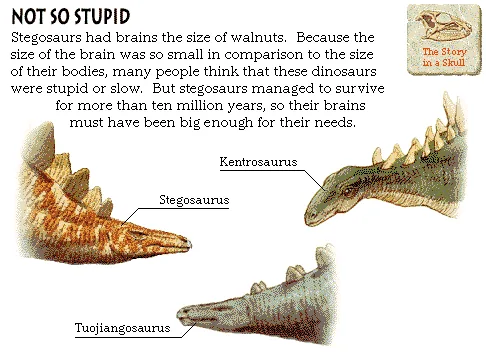
Stegosaurs had brains the size of walnuts. Because the size of the brain was so small in comparison to the size of their bodies, many people think that these dinosaurs were stupid or slow. But stegosaurs managed to survive for more than ten million years, so their brains must have been big enough for their needs.

Erroneous Etching

Erroneous Etching

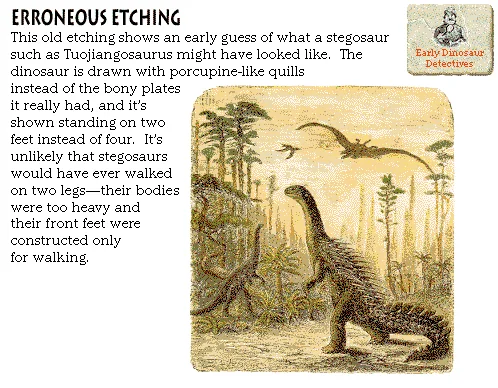
This old etching shows an early guess of what a stegosaur such as Tuojiangosaurus might have looked like. The dinosaur is drawn with porcupine-like quills instead of the bony plates it really had, and it's shown standing on two feet instead of four. It's unlikely that stegosaurs would have ever walked on two legs—their bodies were too heavy and their front feet were constructed only for walking.

Stones to Start Off With

Stones to Start Off With

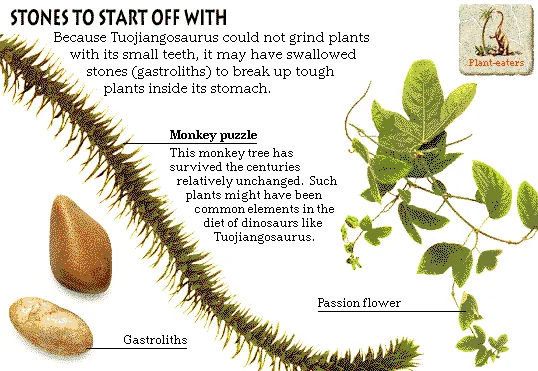
Because Tuojiangosaurus could not grind plants with its small teeth, it may have swallowed stones (gastroliths) to break up tough plants inside its stomach.

Monkey puzzleThis monkey tree has survived the centuries relatively unchanged. Such plants might have been common elements in the diet of dinosaurs like Tuojiangosaurus.

Explore more

Source: Microsoft Dinosaurs (1993) CD-ROM. Text liberated from original screen art; images & audio restored from disc. Original media is Microsoft/supplier copyright — non-commercial educational preservation. Credits & Acknowledgements