Microsoft Dinosaurs
Teeth of Plant-Eaters

From rakers to grinders, plant-eating dinosaurs had an amazing variety of teeth for tackling tough plants!

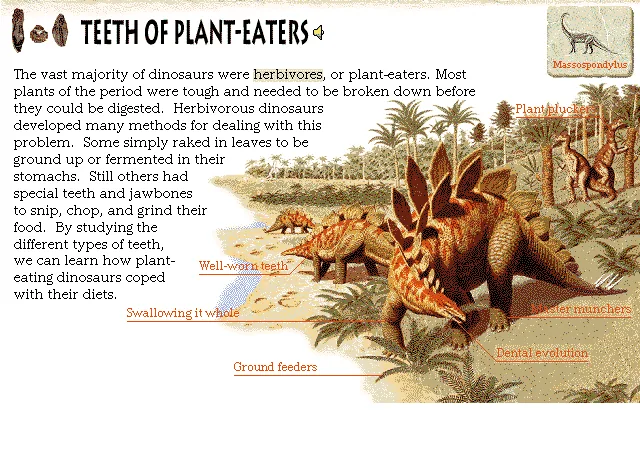
The vast majority of dinosaurs were herbivores, or plant-eaters. Most plants of the period were tough and needed to be broken down before they could be digested. Herbivorous dinosaurs developed many methods for dealing with this problem. Some simply raked in leaves to be ground up or fermented in their stomachs. Still others had special teeth and jawbones to snip, chop, and grind their food. By studying the different types of teeth, we can learn how plant-eating dinosaurs coped with their diets.

Explore

Dental Evolution

Dental Evolution

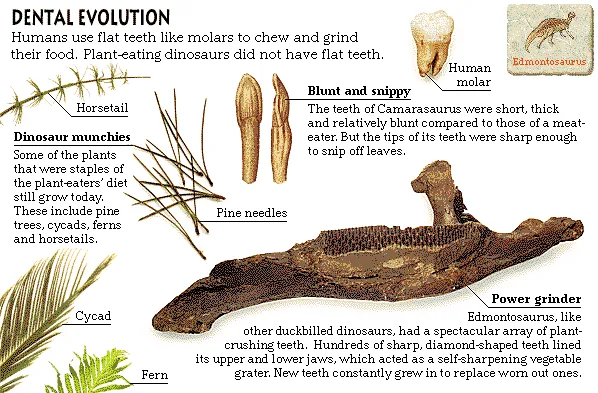
Humans use flat teeth like molars to chew and grind their food. Plant-eating dinosaurs did not have flat teeth.

Dinosaur munchiesSome of the plants that were staples of the plant-eaters' diet still grow today. These include pine trees, cycads, ferns and horsetails.
Blunt and snippyThe teeth of Camarasaurus were short, thick and relatively blunt compared to those of a meat-eater. But the tips of its teeth were sharp enough to snip off leaves.
Power grinderEdmontosaurus, like other duckbilled dinosaurs, had a spectacular array of plant-crushing teeth. Hundreds of sharp, diamond-shaped teeth lined its upper and lower jaws, which acted as a self-sharpening vegetable grater. New teeth constantly grew in to replace worn out ones.
Plant Pluckers

Plant Pluckers

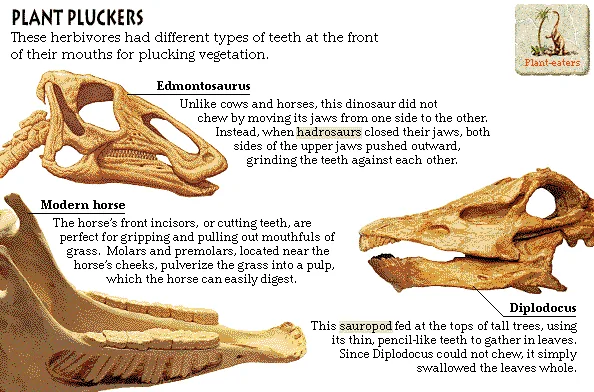
These herbivores had different types of teeth at the front of their mouths for plucking vegetation.

EdmontosaurusUnlike cows and horses, this dinosaur did not chew by moving its jaws from one side to the other. Instead, when hadrosaurs closed their jaws, both sides of the upper jaws pushed outward, grinding the teeth against each other.
Modern horseThe horse's front incisors, or cutting teeth, are perfect for gripping and pulling out mouthfuls of grass. Molars and premolars, located near the horse's cheeks, pulverize the grass into a pulp, which the horse can easily digest.
DiplodocusThis sauropod fed at the tops of tall trees, using its thin, pencil-like teeth to gather in leaves. Since Diplodocus could not chew, it simply swallowed the leaves whole.
Master Munchers

Master Munchers

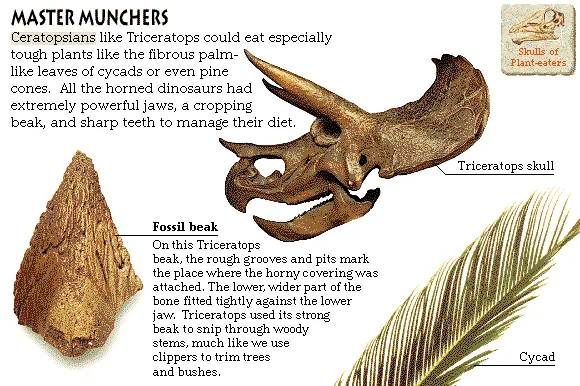
Ceratopsians like Triceratops could eat especially tough plants like the fibrous palm-like leaves of cycads or even pine cones. All the horned dinosaurs had extremely powerful jaws, a cropping beak, and sharp teeth to manage their diet.

Fossil beakOn this Triceratops beak, the rough grooves and pits mark the place where the horny covering was attached. The lower, wider part of the bone fitted tightly against the lower jaw. Triceratops used its strong beak to snip through woody stems, much like we use clippers to trim trees and bushes.
Well-Worn Teeth

Well-Worn Teeth

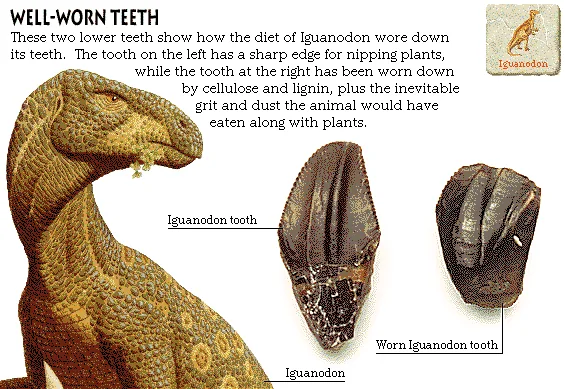
These two lower teeth show how the diet of Iguanodon wore down its teeth. The tooth on the left has a sharp edge for nipping plants, while the tooth on the right has been worn down by cellulose and lignin, plus the inevitable grit and dust the animal would have eaten along with plants.

Ground Feeders

Ground Feeders

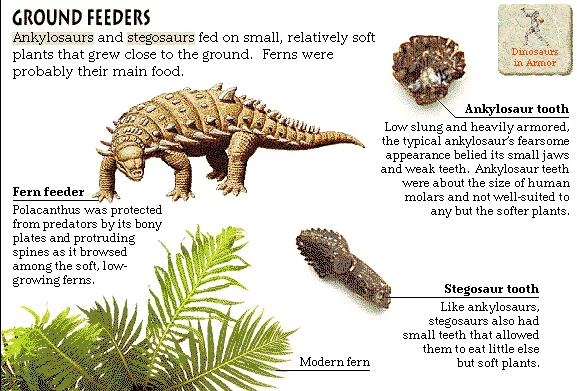
Ankylosaurs and stegosaurs fed on small, relatively soft plants that grew close to the ground. Ferns were probably their main food.

Ankylosaur toothLow slung and heavily armored, the typical ankylosaur's fearsome appearance belied its small jaws and weak teeth. Ankylosaur teeth were about the size of human molars and not well-suited to any but the softer plants.
Fern feederPolacanthus was protected from predators by its bony plates and protruding spines as it browsed among the soft, low-growing ferns.
Stegosaur toothLike ankylosaurs, stegosaurs also had small teeth that allowed them to eat little else but soft plants.
Swallowing It Whole

Swallowing It Whole

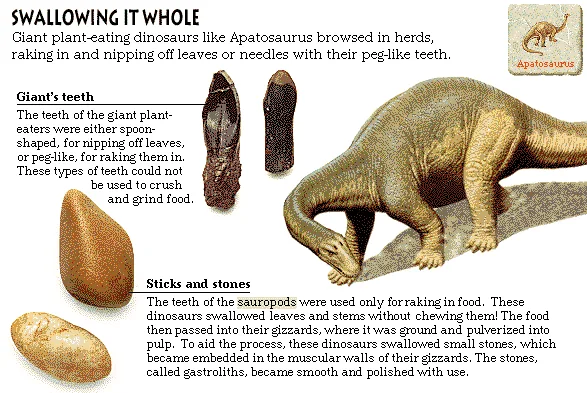
Giant plant-eating dinosaurs like Apatosaurus browsed in herds, raking in and nipping off leaves or needles with their peg-like teeth.

Giant's teethThe teeth of the giant plant-eaters were either spoon-shaped, for nipping off leaves, or peg-like, for raking them in. These types of teeth could not be used to crush and grind food.
Sticks and stonesThe teeth of the sauropods were used only for raking in food. These dinosaurs swallowed leaves and stems without chewing them! The food then passed into their gizzards, where it was ground and pulverized into pulp. To aid the process, these dinosaurs swallowed small stones, which became embedded in the muscular walls of their gizzards. The stones, called gastroliths, became smooth and polished with use.

Explore more

Source: Microsoft Dinosaurs (1993) CD-ROM. Text liberated from original screen art; images & audio restored from disc. Original media is Microsoft/supplier copyright — non-commercial educational preservation. Credits & Acknowledgements