The Shell's the Secret
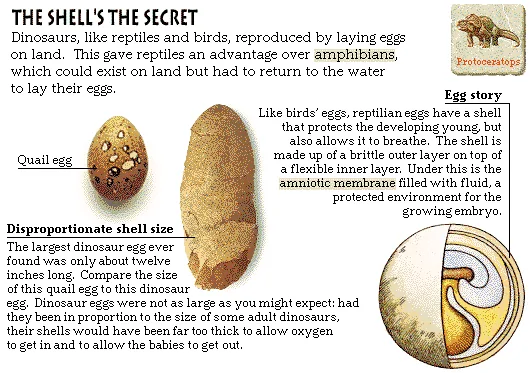
Dinosaurs, like reptiles and birds, reproduced by laying eggs on land. This gave reptiles an advantage over amphibians, which could exist on land but had to return to the water to lay their eggs.
From tiny cracked shells to communal nurseries, dinosaur eggs reveal the surprising family lives of ancient giants.
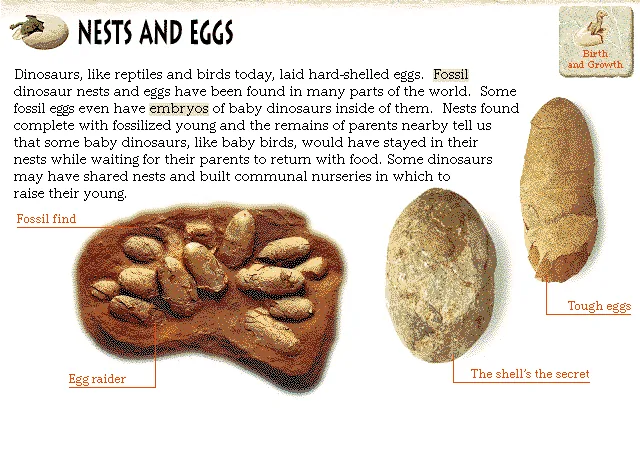
Dinosaurs, like reptiles and birds today, laid hard-shelled eggs. Fossil dinosaur nests and eggs have been found in many parts of the world. Some fossil eggs even have embryos of baby dinosaurs inside of them. Nests found complete with fossilized young and the remains of parents nearby tell us that some baby dinosaurs, like baby birds, would have stayed in their nests while waiting for their parents to return with food. Some dinosaurs may have shared nests and built communal nurseries in which to raise their young.

Dinosaurs, like reptiles and birds, reproduced by laying eggs on land. This gave reptiles an advantage over amphibians, which could exist on land but had to return to the water to lay their eggs.

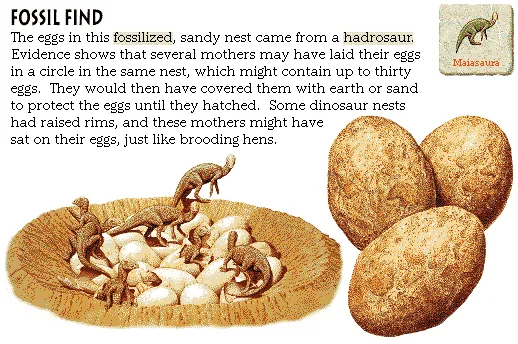
The eggs in this fossilized, sandy nest came from a hadrosaur. Evidence shows that several mothers may have laid their eggs in a circle in the same nest, which might contain up to thirty eggs. They would then have covered them with earth or sand to protect the eggs until they hatched. Some dinosaur nests had raised rims, and these mothers might have sat on their eggs, just like brooding hens.

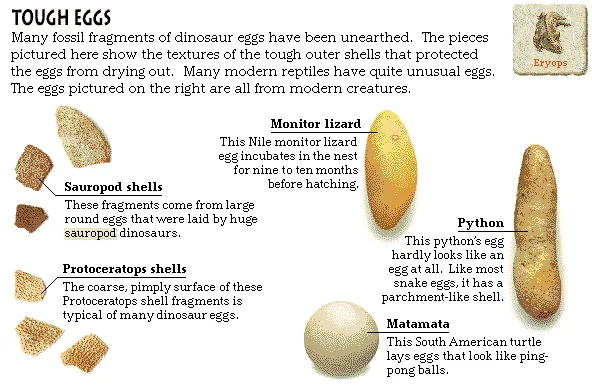
Many fossil fragments of dinosaur eggs have been unearthed. The pieces pictured here show the textures of the tough outer shells that protected the eggs from drying out. Many modern reptiles have quite unusual eggs. The eggs pictured on the right are all from modern creatures.

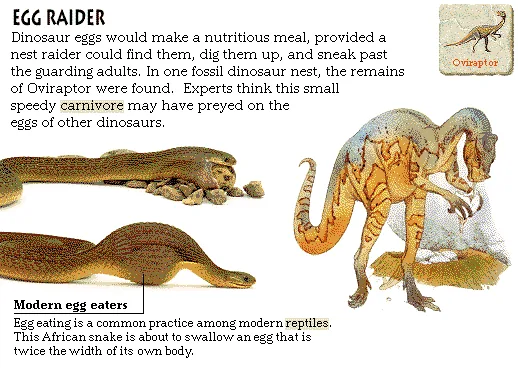
Dinosaur eggs would make a nutritious meal, provided a nest raider could find them, dig them up, and sneak past the guarding adults. In one fossil dinosaur nest, the remains of Oviraptor were found. Experts think this small speedy carnivore may have preyed on the eggs of other dinosaurs.
Source: Microsoft Dinosaurs (1993) CD-ROM. Text liberated from original screen art; images & audio restored from disc. Original media is Microsoft/supplier copyright — non-commercial educational preservation. Credits & Acknowledgements