A Mighty Predator
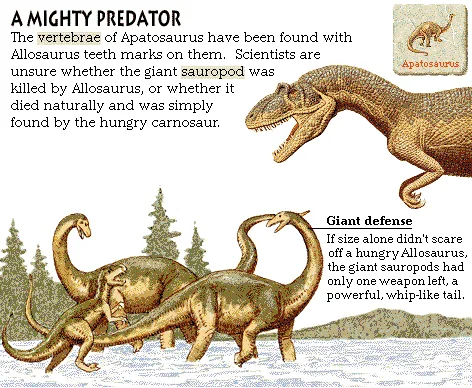
The vertebrae of Apatosaurus have been found with Allosaurus teeth marks on them. Scientists are unsure whether the giant sauropod was killed by Allosaurus, or whether it died naturally and was simply found by the hungry carnosaur.
The most feared predator of the Jurassic β before T. rex was even born.
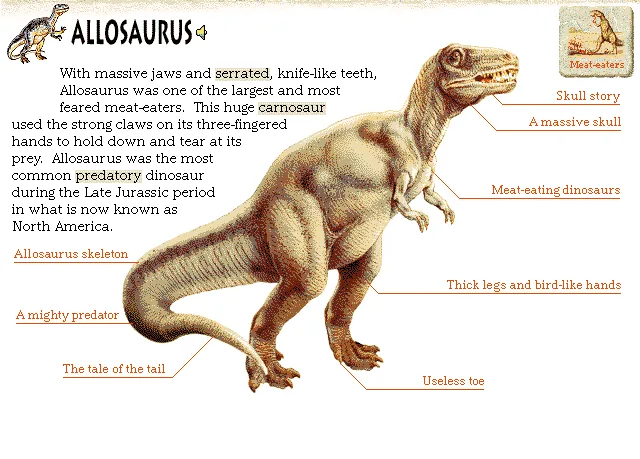
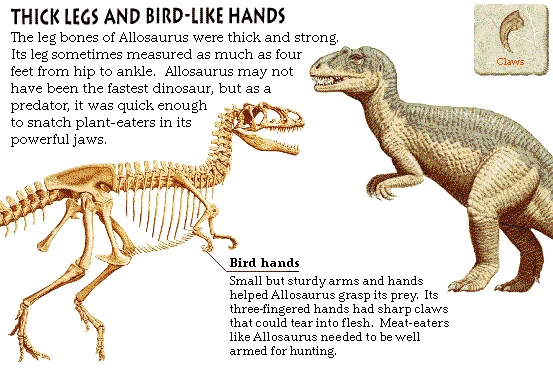
With massive jaws and serrated, knife-like teeth, Allosaurus was one of the largest and most feared meat-eaters. This huge carnosaur used the strong claws on its three-fingered hands to hold down and tear at its prey. Allosaurus was the most common predatory dinosaur during the Late Jurassic period in what is now known as North America.

The vertebrae of Apatosaurus have been found with Allosaurus teeth marks on them. Scientists are unsure whether the giant sauropod was killed by Allosaurus, or whether it died naturally and was simply found by the hungry carnosaur.

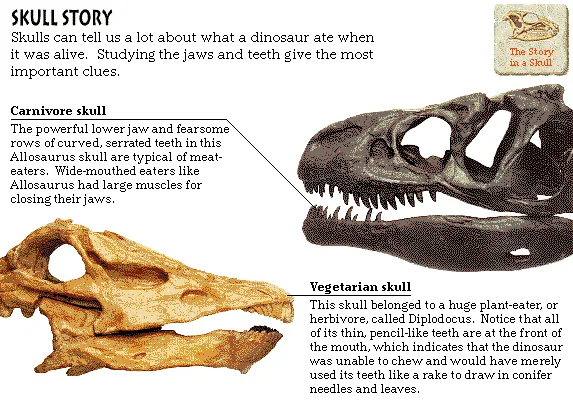
Skulls can tell us a lot about what a dinosaur ate when it was alive. Studying the jaws and teeth give the most important clues.

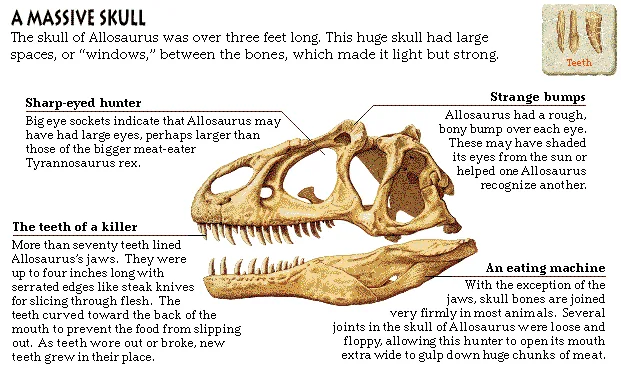
The skull of Allosaurus was over three feet long. This huge skull had large spaces, or "windows," between the bones, which made it light but strong.

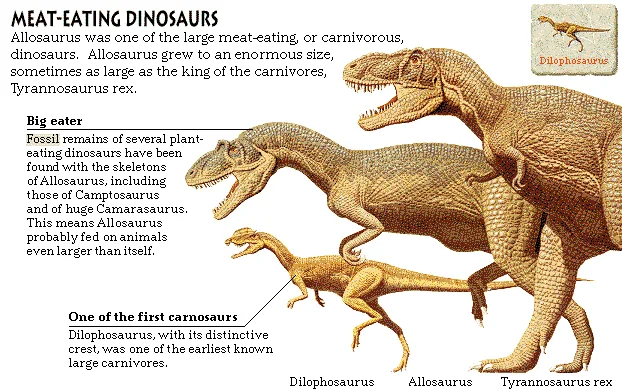
Allosaurus was one of the large meat-eating, or carnivorous, dinosaurs. Allosaurus grew to an enormous size, sometimes as large as the king of the carnivores, Tyrannosaurus rex.

The leg bones of Allosaurus were thick and strong. Its leg sometimes measured as much as four feet from hip to ankle. Allosaurus may not have been the fastest dinosaur, but as a predator, it was quick enough to snatch plant-eaters in its powerful jaws.

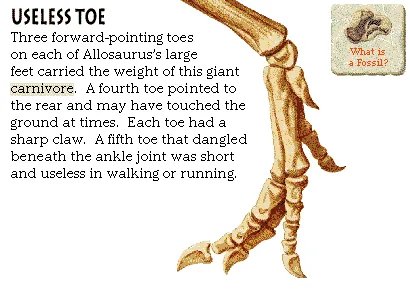
Three forward-pointing toes on each of Allosaurus's large feet carried the weight of this giant carnivore. A fourth toe pointed to the rear and may have touched the ground at times. Each toe had a sharp claw. A fifth toe that dangled beneath the ankle joint was short and useless in walking or running.

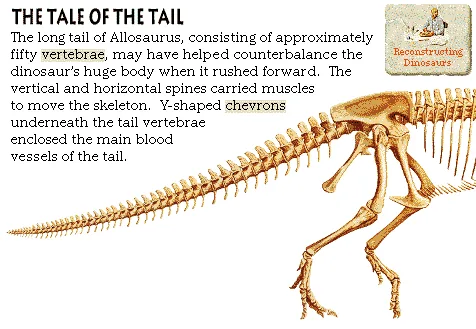
The long tail of Allosaurus, consisting of approximately fifty vertebrae, may have helped counterbalance the dinosaur's huge body when it rushed forward. The vertical and horizontal spines carried muscles to move the skeleton. Y-shaped chevrons underneath the tail vertebrae enclosed the main blood vessels of the tail.

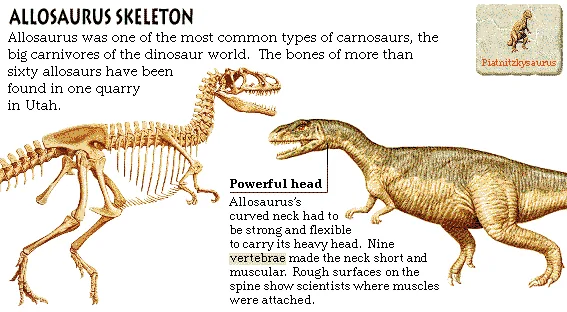
Allosaurus was one of the most common types of carnosaurs, the big carnivores of the dinosaur world. The bones of more than sixty allosaurus have been found in one quarry in Utah.
Source: Microsoft Dinosaurs (1993) CD-ROM. Text liberated from original screen art; images & audio restored from disc. Original media is Microsoft/supplier copyright β non-commercial educational preservation. Credits & Acknowledgements