Balancing Act
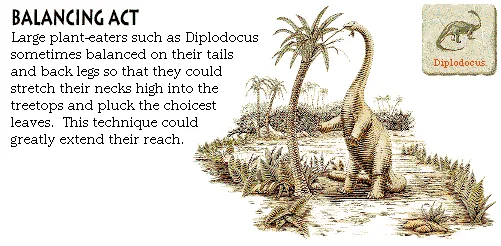
Large plant-eaters such as Diplodocus sometimes balanced on their tails and back legs so that they could stretch their necks high into the treetops and pluck the choicest leaves. This technique could greatly extend their reach.
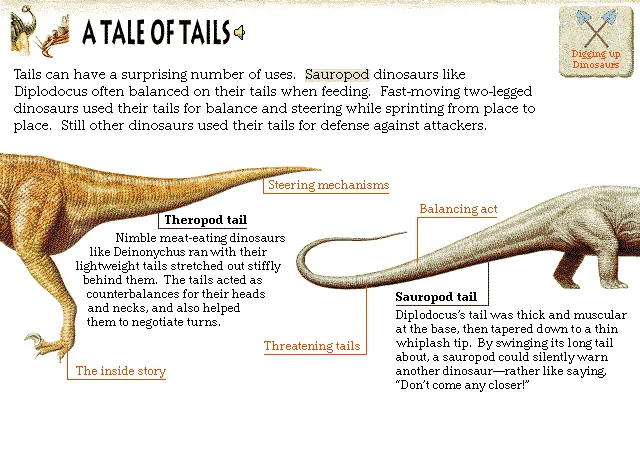
Dinosaur tails were tools for reaching food, steering at speed, and fighting off attackers!
Tails can have a surprising number of uses. Sauropod dinosaurs like Diplodocus often balanced on their tails when feeding. Fast-moving two-legged dinosaurs used their tails for balance and steering while sprinting from place to place. Still other dinosaurs used their tails for defense against attackers.
Large plant-eaters such as Diplodocus sometimes balanced on their tails and back legs so that they could stretch their necks high into the treetops and pluck the choicest leaves. This technique could greatly extend their reach.
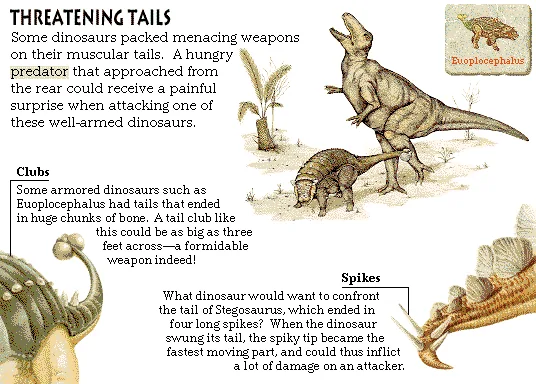
Some dinosaurs packed menacing weapons on their muscular tails. A hungry predator that approached from the rear could receive a painful surprise when attacking one of these well-armed dinosaurs.
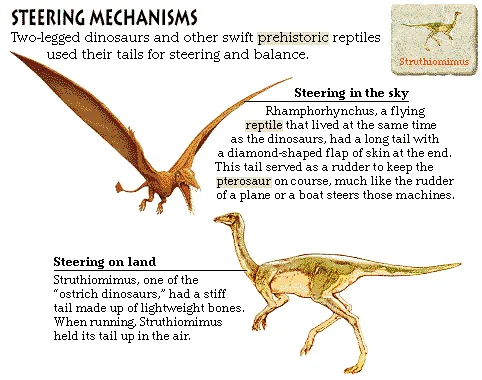
Two-legged dinosaurs and other swift prehistoric reptiles used their tails for steering and balance.
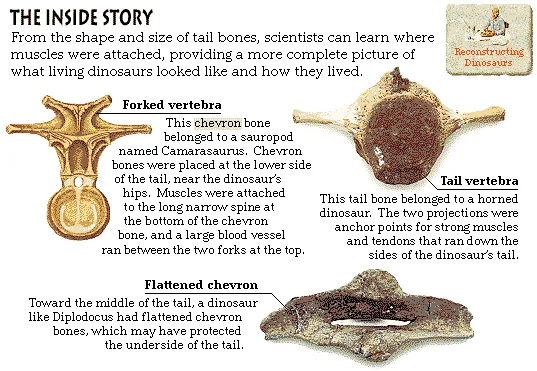
From the shape and size of tail bones, scientists can learn where muscles were attached, providing a more complete picture of what living dinosaurs looked like and how they lived.
Source: Microsoft Dinosaurs (1993) CD-ROM. Text liberated from original screen art; images & audio restored from disc. Original media is Microsoft/supplier copyright — non-commercial educational preservation. Credits & Acknowledgements