Portrait of a Frilled Family
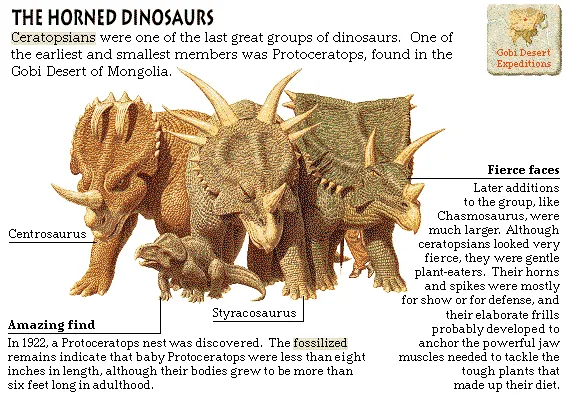
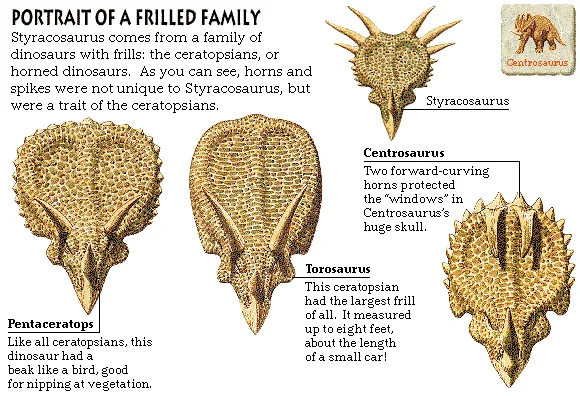
Styracosaurus comes from a family of dinosaurs with frills: the ceratopsians, or horned dinosaurs. As you can see, horns and spikes were not unique to Styracosaurus, but were a trait of the ceratopsians.
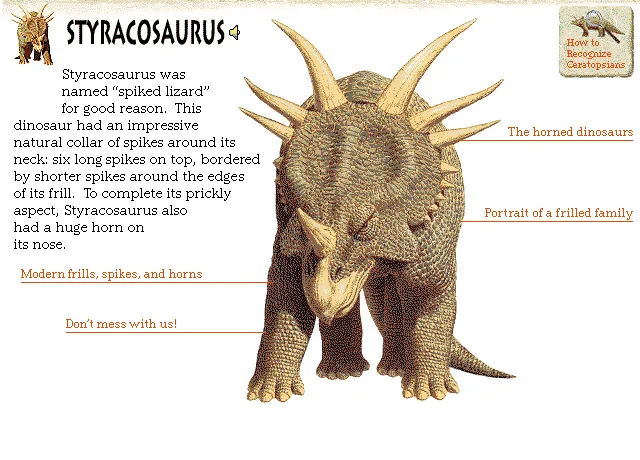
Six spikes, one massive horn, and absolutely zero interest in being messed with.
Styracosaurus was named "spiked lizard" for good reason. This dinosaur had an impressive natural collar of spikes around its neck: six long spikes on top, bordered by shorter spikes around the edges of its frill. To complete its prickly aspect, Styracosaurus also had a huge horn on its nose.

Styracosaurus comes from a family of dinosaurs with frills: the ceratopsians, or horned dinosaurs. As you can see, horns and spikes were not unique to Styracosaurus, but were a trait of the ceratopsians.

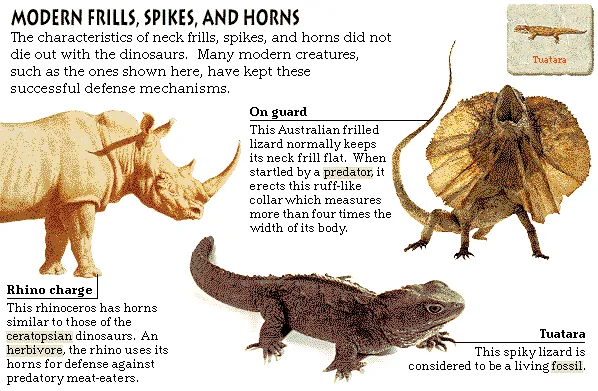
The characteristics of neck frills, spikes, and horns did not die out with the dinosaurs. Many modern creatures, such as the ones shown here, have kept these successful defense mechanisms.

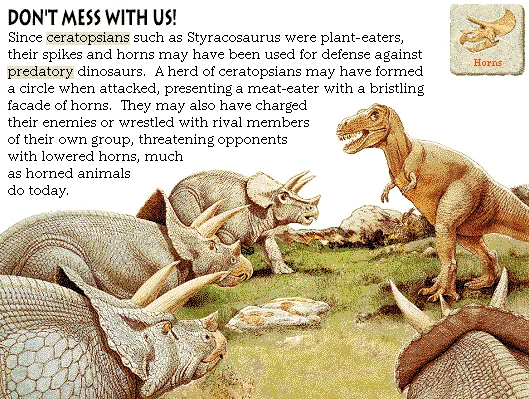
Since ceratopsians such as Styracosaurus were plant-eaters, their spikes and horns may have been used for defense against predatory dinosaurs. A herd of ceratopsians may have formed a circle when attacked, presenting a meat-eater with a bristling facade of horns. They may also have charged their enemies or wrestled with rival members of their own group, threatening opponents with lowered horns, much as horned animals do today.

Ceratopsians were one of the last great groups of dinosaurs. One of the earliest and smallest members was Protoceratops, found in the Gobi Desert of Mongolia.
Source: Microsoft Dinosaurs (1993) CD-ROM. Text liberated from original screen art; images & audio restored from disc. Original media is Microsoft/supplier copyright β non-commercial educational preservation. Credits & Acknowledgements