Microsoft Dinosaurs
Iguana
Iguana

ih-GWAH-nuh name means “Unknown”

Today's iguana is the living clue that cracked the dinosaur mystery!

KindPrehistoric creature Period Present

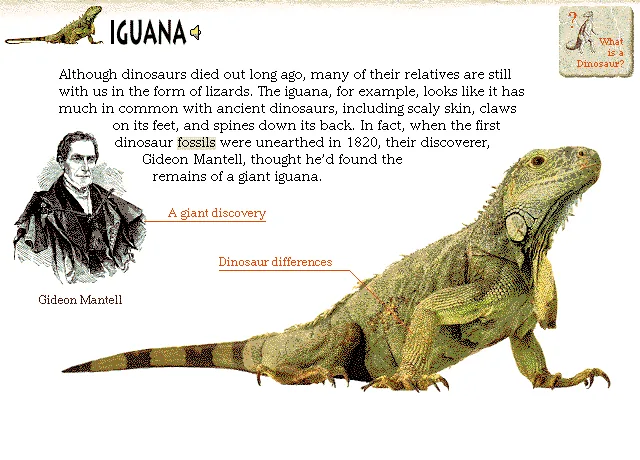
Although dinosaurs died out long ago, many of their relatives are still with us in the form of lizards. The iguana, for example, looks like it has much in common with ancient dinosaurs, including scaly skin, claws on its feet, and spines down its back. In fact, when the first dinosaur fossils were unearthed in 1820, their discoverer, Gideon Mantell, thought he'd found the remains of a giant iguana.

Explore

Dinosaur Differences

Dinosaur Differences

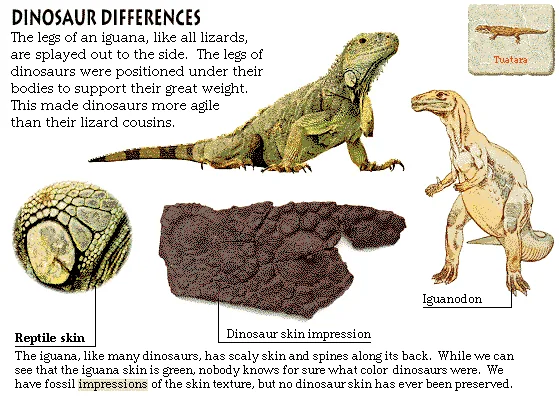
The legs of an iguana, like all lizards, are splayed out to the side. The legs of dinosaurs were positioned under their bodies to support their great weight. This made dinosaurs more agile than their lizard cousins. The iguana, like many dinosaurs, has scaly skin and spines along its back. While we can see that the iguana skin is green, nobody knows for sure what color dinosaurs were. We have fossil impressions of the skin texture, but no dinosaur skin has ever been preserved.
A Giant Discovery

A Giant Discovery

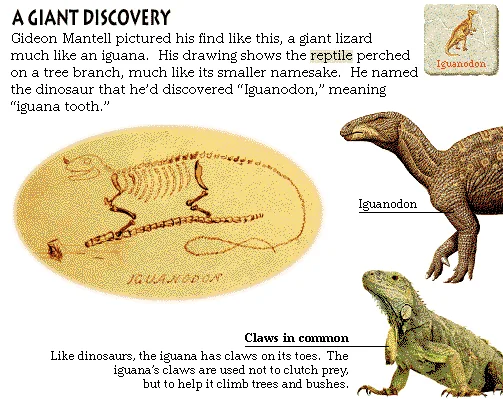
Gideon Mantell pictured his find like this, a giant lizard much like an iguana. His drawing shows the reptile perched on a tree branch, much like its smaller namesake. He named the dinosaur that he'd discovered "Iguanodon," meaning "iguana tooth."

Claws in commonLike dinosaurs, the iguana has claws on its toes. The iguana's claws are used not to clutch prey, but to help it climb trees and bushes.

Explore more

Source: Microsoft Dinosaurs (1993) CD-ROM. Text liberated from original screen art; images & audio restored from disc. Original media is Microsoft/supplier copyright — non-commercial educational preservation. Credits & Acknowledgements