Radiating Reptiles
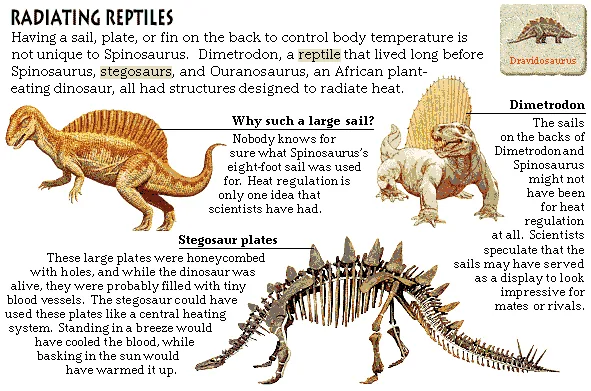
Having a sail, plate, or fin on the back to control body temperature is not unique to Spinosaurus. Dimetrodon, a reptile that lived long before Spinosaurus, stegosaurs, and Ouranosaurus, an African plant-eating dinosaur, all had structures designed to radiate heat.
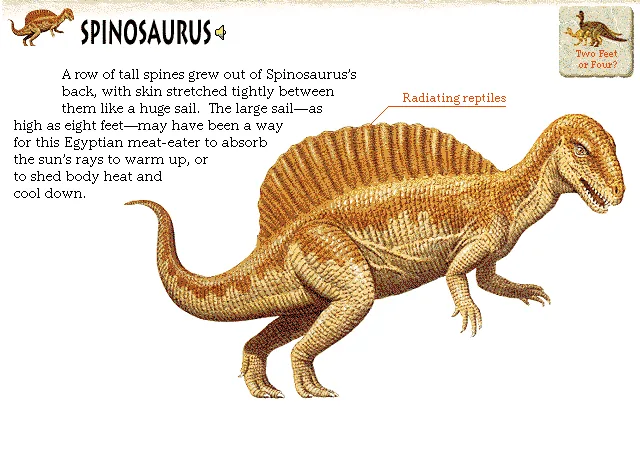
Why such a large sail?Nobody knows for sure what Spinosaurus's eight-foot sail was used for. Heat regulation is only one idea that scientists have had.
DimetrodonThe sails on the backs of Dimetrodon and Spinosaurus might not have been for heat regulation at all. Scientists speculate that the sails may have served as a display to look impressive for mates or rivals.
Stegosaur platesThese large plates were honeycombed with holes, and while the dinosaur was alive, they were probably filled with tiny blood vessels. The stegosaur could have used these plates like a central heating system. Standing in a breeze would have cooled the blood, while basking in the sun would have warmed it up.