Microsoft Dinosaurs
Mosasaurus
Mosasaurus
Mosasaurus

MOH-zah-SOR-us name means β€œMeuse lizard”

Moving swiftly through the water, this reptile caught prey in its huge, gaping jaws.

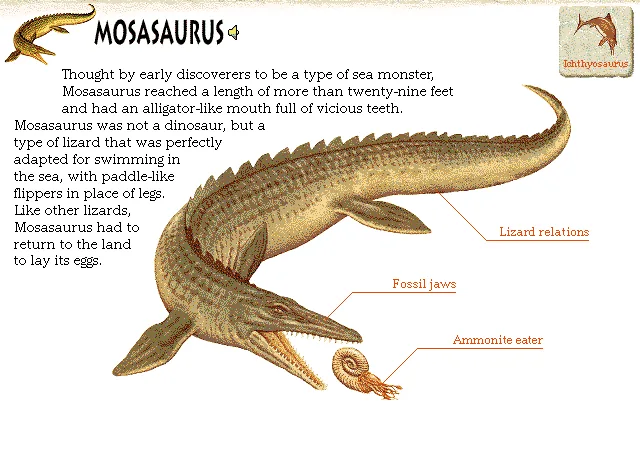
Thought by early discoverers to be a type of sea monster, Mosasaurus reached a length of more than twenty-nine feet and had an alligator-like mouth full of vicious teeth. Mosasaurus was not a dinosaur, but a type of lizard that was perfectly adapted for swimming in the sea, with paddle-like flippers in place of legs. Like other lizards, Mosasaurus had to return to the land to lay its eggs.

Explore

Ammonite Eater

Ammonite Eater

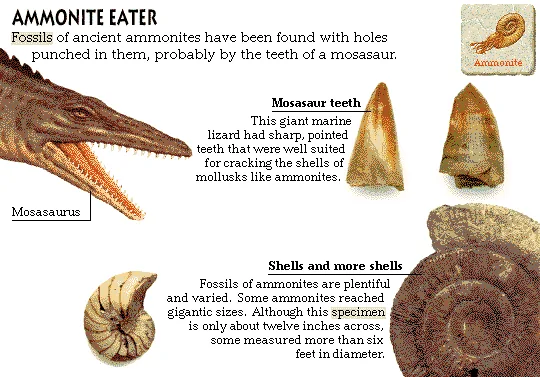
Fossils of ancient ammonites have been found with holes punched in them, probably by the teeth of a mosasaur.

Mosasaur teethThis giant marine lizard had sharp, pointed teeth that were well suited for cracking the shells of mollusks like ammonites.
Shells and more shellsFossils of ammonites are plentiful and varied. Some ammonites reached gigantic sizes. Although this specimen is only about twelve inches across, some measured more than six feet in diameter.
Fossil Jaws

Fossil Jaws

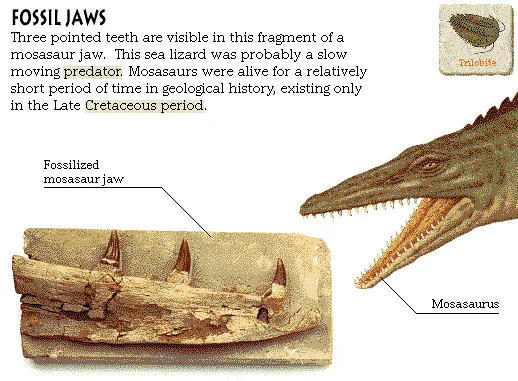
Three pointed teeth are visible in this fragment of a mosasaur jaw. This sea lizard was probably a slow moving predator. Mosasaurs were alive for a relatively short period of time in geological history, existing only in the Late Cretaceous period.

Lizard Relations

Lizard Relations

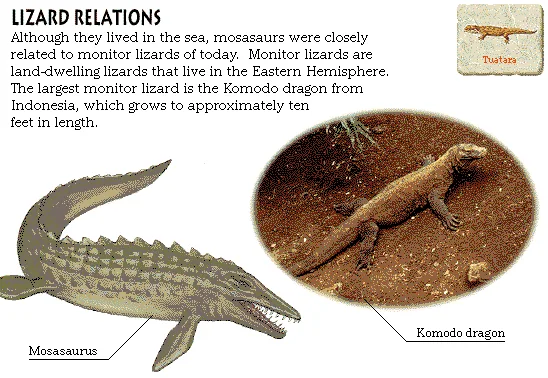
Although they lived in the sea, mosasaurs were closely related to monitor lizards of today. Monitor lizards are land-dwelling lizards that live in the Eastern Hemisphere. The largest monitor lizard is the Komodo dragon from Indonesia, which grows to approximately ten feet in length.

Explore more

Source: Microsoft Dinosaurs (1993) CD-ROM. Text liberated from original screen art; images & audio restored from disc. Original media is Microsoft/supplier copyright β€” non-commercial educational preservation. Credits & Acknowledgements