From a Big Family
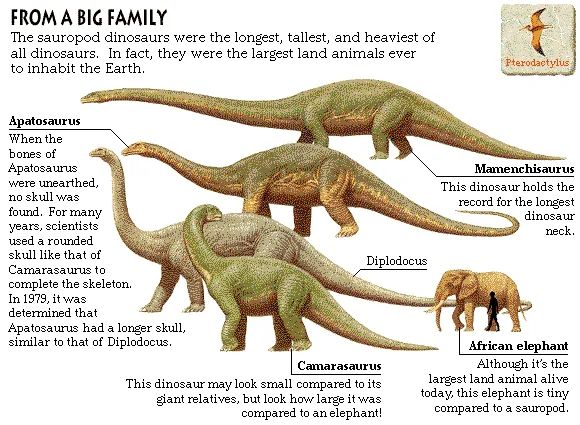
The sauropod dinosaurs were the longest, tallest, and heaviest of all dinosaurs. In fact, they were the largest land animals ever to inhabit the Earth.
One of the most common giants of the Jurassic, whose hollow backbone bones helped carry a body heavier than three elephants!
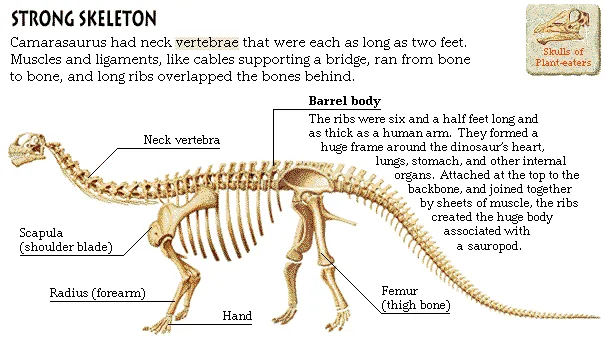
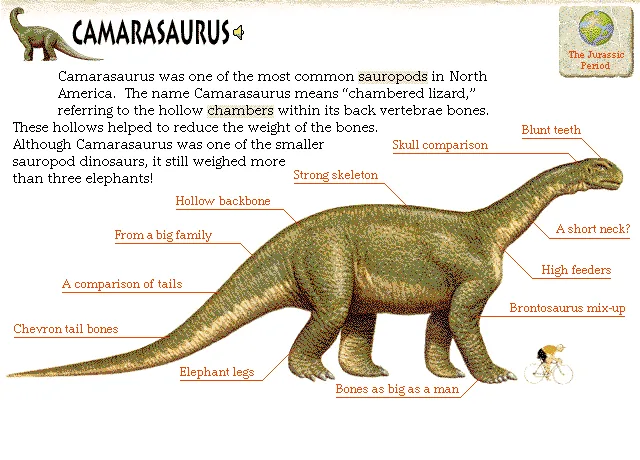
Camarasaurus was one of the most common sauropods in North America. The name Camarasaurus means "chambered lizard," referring to the hollow chambers within its back vertebrae bones. These hollows helped to reduce the weight of the bones. Although Camarasaurus was one of the smaller sauropod dinosaurs, it still weighed more than three elephants!

The sauropod dinosaurs were the longest, tallest, and heaviest of all dinosaurs. In fact, they were the largest land animals ever to inhabit the Earth.

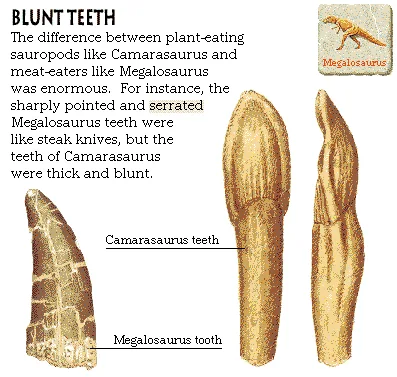
The difference between plant-eating sauropods like Camarasaurus and meat-eaters like Megalosaurus was enormous. For instance, the sharply pointed and serrated Megalosaurus teeth were like steak knives, but the teeth of Camarasaurus were thick and blunt.

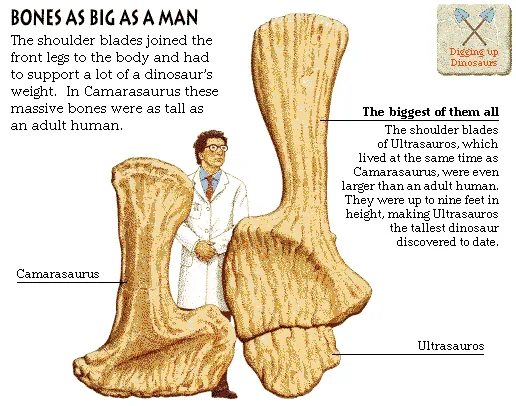
The shoulder blades joined the front legs to the body and had to support a lot of a dinosaur's weight. In Camarasaurus these massive bones were as tall as an adult human.

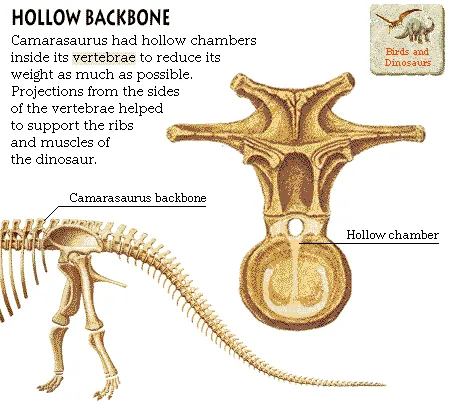
Camarasaurus had hollow chambers inside its vertebrae to reduce its weight as much as possible. Projections from the sides of the vertebrae helped to support the ribs and muscles of the dinosaur.

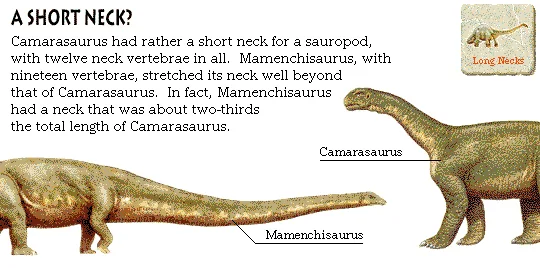
Camarasaurus had rather a short neck for a sauropod, with twelve neck vertebrae in all. Mamenchisaurus, with nineteen vertebrae, stretched its neck well beyond that of Camarasaurus. In fact, Mamenchisaurus had a neck that was about two-thirds the total length of Camarasaurus.

Camarasaurus had neck vertebrae that were each as long as two feet. Muscles and ligaments, like cables supporting a bridge, ran from bone to bone, and long ribs overlapped the bones behind.

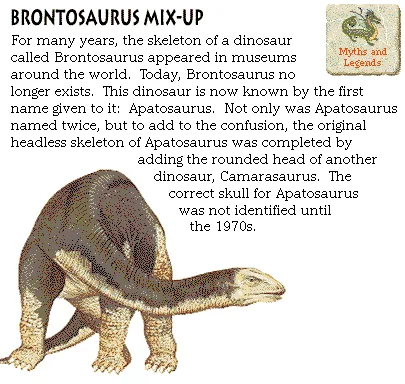
For many years, the skeleton of a dinosaur called Brontosaurus appeared in museums around the world. Today, Brontosaurus no longer exists. This dinosaur is now known by the first name given to it: Apatosaurus. Not only was Apatosaurus named twice, but to add to the confusion, the original headless skeleton of Apatosaurus was completed by adding the rounded head of another dinosaur, Camarasaurus. The correct skull for Apatosaurus was not identified until the 1970s.

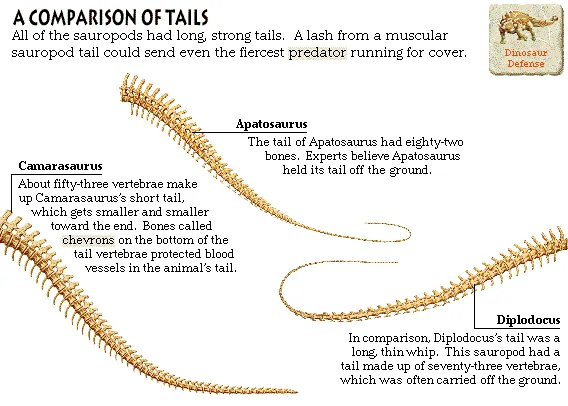
All of the sauropods had long, strong tails. A lash from a muscular sauropod tail could send even the fiercest predator running for cover.

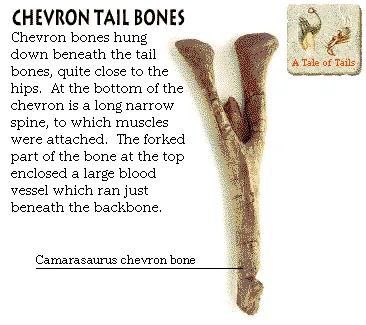
Chevron bones hung down beneath the tail bones, quite close to the hips. At the bottom of the chevron is a long narrow spine, to which muscles were attached. The forked part of the bone at the top enclosed a large blood vessel which ran just beneath the backbone.

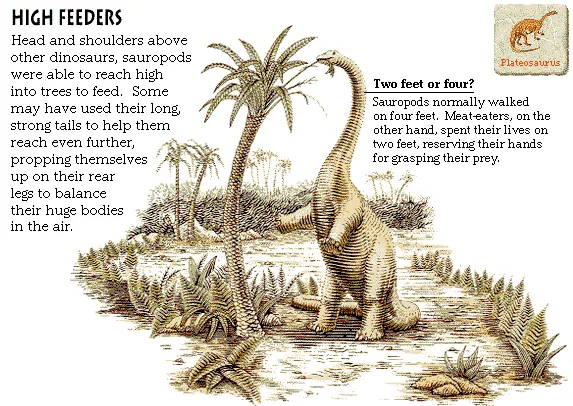
Head and shoulders above other dinosaurs, sauropods were able to reach high into trees to feed. Some may have used their long, strong tails to help them reach even further, propping themselves up on their rear legs to balance their huge bodies in the air.

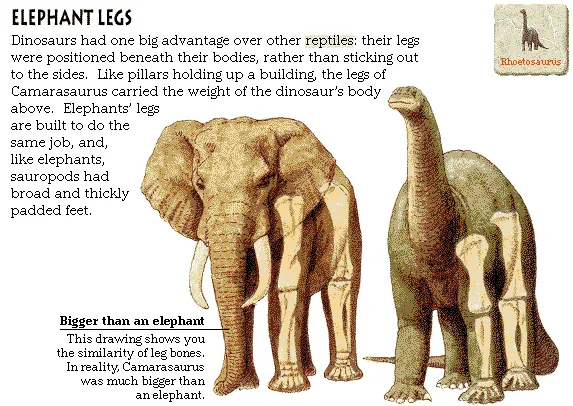
Dinosaurs had one big advantage over other reptiles: their legs were positioned beneath their bodies, rather than sticking out to the sides. Like pillars holding up a building, the legs of Camarasaurus carried the weight of the dinosaur's body above. Elephants' legs are built to do the same job, and, like elephants, sauropods had broad and thickly padded feet.

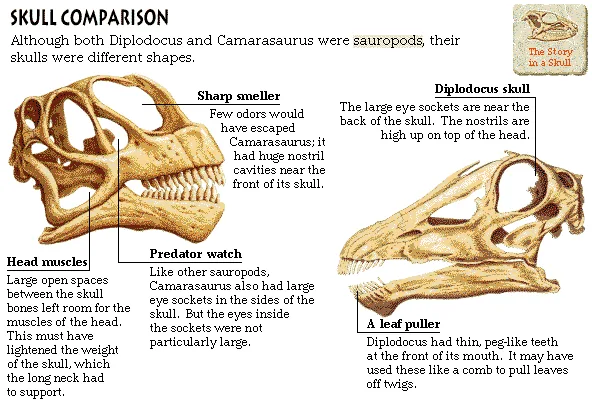
Although both Diplodocus and Camarasaurus were sauropods, their skulls were different shapes.
Source: Microsoft Dinosaurs (1993) CD-ROM. Text liberated from original screen art; images & audio restored from disc. Original media is Microsoft/supplier copyright — non-commercial educational preservation. Credits & Acknowledgements